


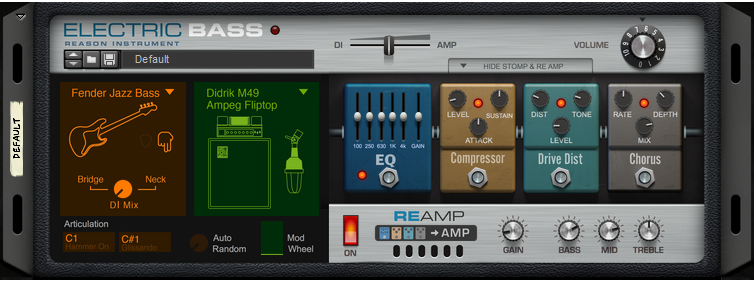
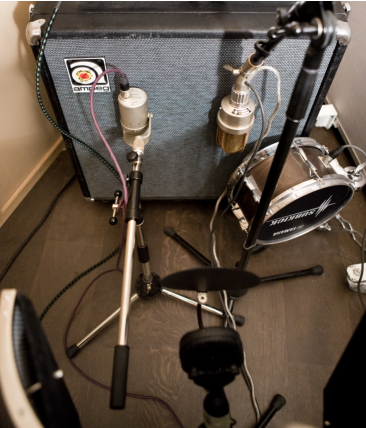
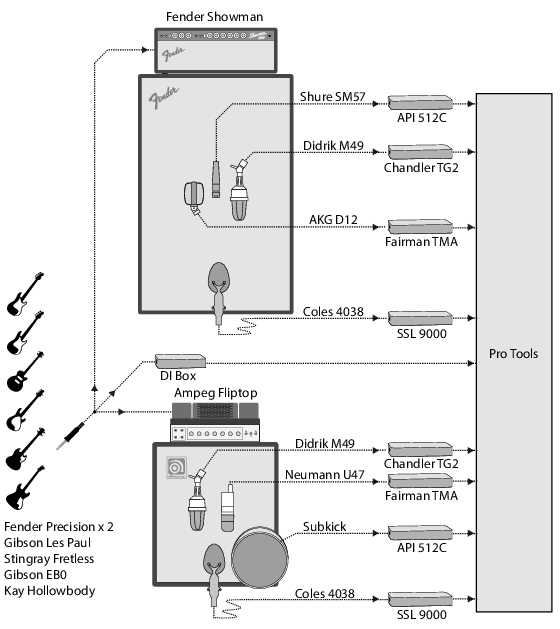
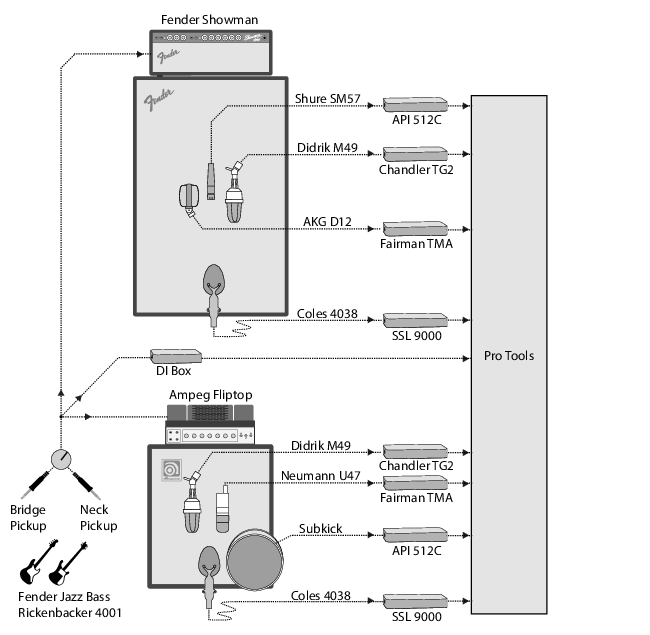
With Reason Electric Bass you have access to a selection of some of the finest electric bass instruments ever produced - hypersampled (see “About Hypersampling”) through signal chains that include some of the true heavyweights in the amp and microphone business.
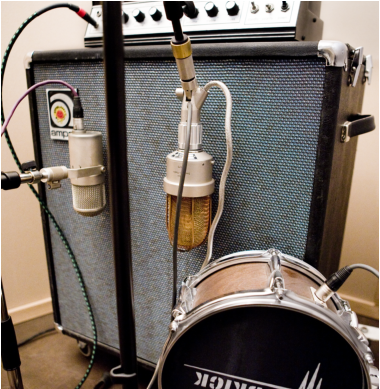
The illustration below shows the various signal chains that are available in the Reason Electric Bass. For more detailed info about the signal chains used when recording/sampling the electric basses, see “The signal chains”.



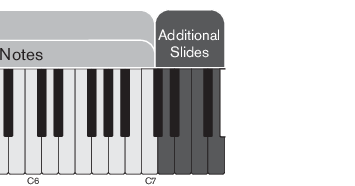
All patches and electric bass instruments in Reason Electric Bass use the following keyboard layout:
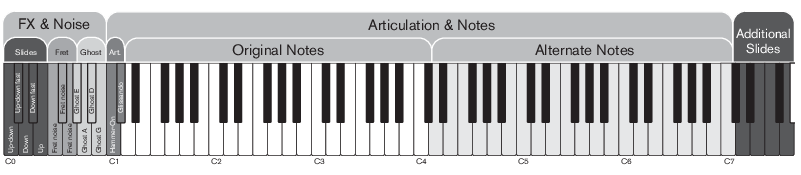
Keys D1-C4 play back the regular bass notes whereas keys D4-C7 play back the D1-C4 note range using alternate notes. Both the regular D1-C4 notes and the D4-C7 notes make use of release samples - samples that trig from key releases - to add even more realism.
|
•
|
|
•
|

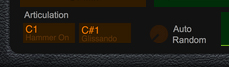
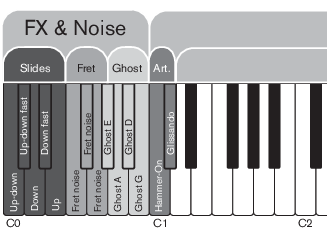
Glissando is the sound you get when you slide the finger on the fret board from one fret to another while the string is still sounding. The Glissando key (C#1) works as a momentary switch. By pressing the Glissando key while playing notes in the D1-C4 and D4-C7 ranges, a whole note glissando is introduced for every played note. The direction of the glissando is from down a whole note up to the played note. The Glissando notes also use several velocity layers.
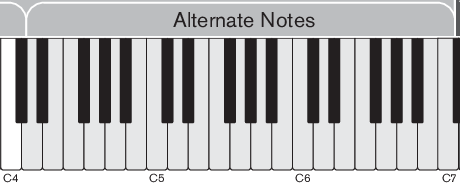
Keys D4-C7 play back the D1-C4 note range using alternate samples. Like with the original notes, the Articulation keys C1-C#1 can be used to momentarily introduce Hammer-on and Glissando samples instead. In all patches and electric bass instruments there are also release samples for the alternate notes.
By using a sustain pedal with your MIDI keyboard you can simulate “tied note repeats”. By pressing the sustain pedal and playing the same note alternating between the “original notes” keys (D1-C4) and the “alternate notes” keys (D4-C7) you’ll get the effect of repeatedly playing the same note without dampening in between. For example, if you want to play the lowest D note in a tied fashion, press the sustain pedal and play the D1 and D4 keys alternating.

|
|
•
|
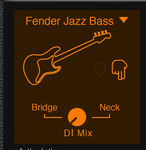
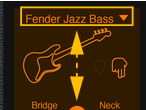
For detailed information about the different electric bass instruments used in Reason Electric Bass, refer to “Aces of basses”.


|
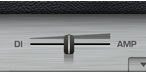
Note that the Pickup Mixer only has audible effect on the dry DI signal. If the Source Mix slider (see “The DI/Amp Source Mix control”) is all the way up to 100% (Amp), the Pickup Mix setting is of no importance.
|
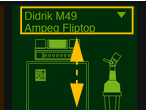
|
•
|
|
•
|
|
•
|
|
•
|
|
•
|
|
•
|
|
•
|
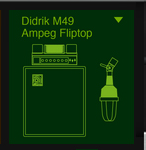
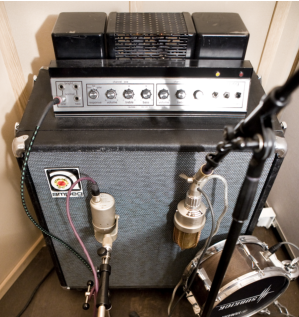
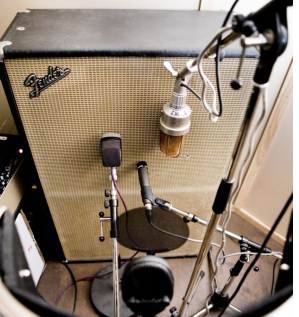
For detailed information about the different amps and microphones used in Reason Electric Bass, refer to “The amp rigs” and “The mics”.
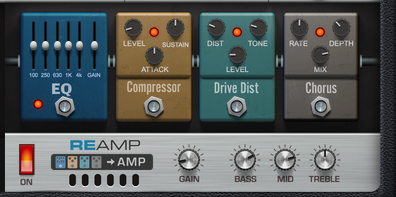
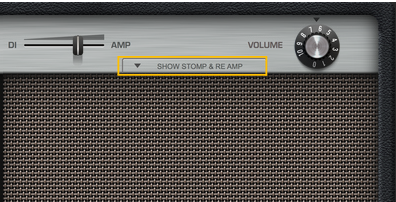
#EQ
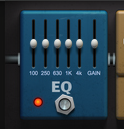
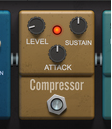
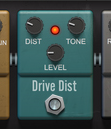
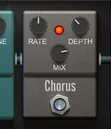
|
|
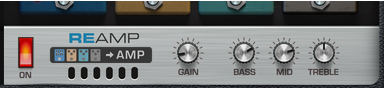
Note, though, that if you route the ReAmp after the stomp boxes the Chorus output will be in mono, see “ReAmp” below.
|

|
|
Note that since the ReAmp is a mono amplifier, routing it after the stomp boxes will turn the Chorus effect into mono.
|
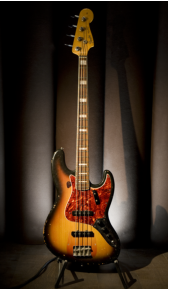
Pickups: two bi-pole pickups connected in parallel.
Strings: Ernie Ball Nickel Round Wound (a couple of months old).
Character: Very dynamic bass which sounds very different depending on playing style and is therefore suited for a wide variety of musical styles. Very direct sound with lots of presence.
Famous users: Flea (Red Hot Chili Peppers), Geddy Lee (Rush), Leland Sklar, Jaco Pastorius.
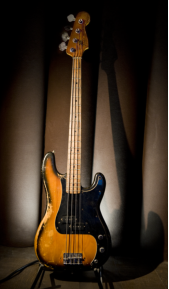
Pickups: 2 single coil (1 pick-up for 2 strings) that work like a humbucker.
Strings: Ernie Ball Flatwound for less overtones and more “round” tone.
Character: Very deep and warm sound with characteristic mid-range and only a little high end.
Famous users: James Jameson (The Funk Brothers, Motown), Donald “Duck” Dunn (Stax), Pino Palladino.
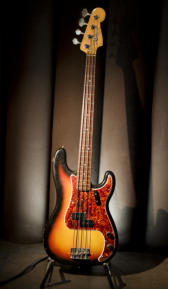
Pickups: 2 single coil (1 pick-up for 2 strings) that work like a humbucker.
Strings: Ernie Ball Round Wound.
Character: The round wound strings played with a pick makes the sound very rich in overtones, perfect for rock, new wave and punk music.
Famous users: Adam Clayton (U2), Geezer Butler (Black Sabbath), Sid Vicious (Sex Pistols).
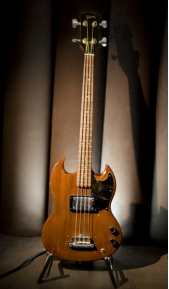
Pickups: one EB humbucker.
Strings: Ernie Ball Round Wound.
Character: The EB-0 is renowned for its deep and fat sound. It’s very suitable for distorted sound.
Famous users: Jack Bruce (Cream), Bill Wyman (Rolling Stones), Glen Cornick (Jethro Tull), Andy Fraser (Free), Kim Gordon (Sonic Youth).
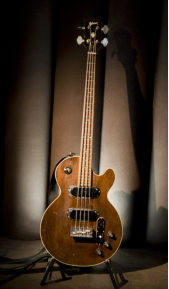
Pickups: Two humbucking pickups that were modded to high-impedance. Reason Electric Bass only uses the neck pickup.
Strings: Ernie Ball 5-string vintage round wound set (more than 10 years old). The thinnest string is not used.
Character: “Plunky” sound which sits right in the mix. A lot of mid and low end with a distinctive attack. Sounds similar to a hollowbody bass.
Famous users: Suzie Quatro
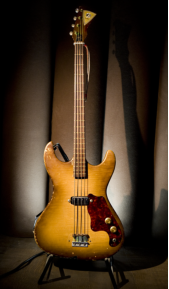
Pickups: Gibson Thunderbird humbucker.
Strings: Pyramid Gold Flatwound.
Character: A “plunky”, hollow sound similar to that of the Les Paul bass.
Famous users: No-one that we know of by name but it has appeared on numerous recordings.
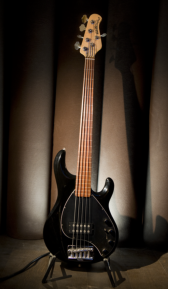
Pickups: MusicMan Humbucker active.
Strings: D'Addario Stainless Flatwound.
Character: The StingRay doesn’t produce the traditional “fretless” sound but a more solid and “round” tone with fantastic frequency response. When you play chords on the StingRay the notes harmonize extremely well together.
Famous users: Tony Levin, Mick Karn (Japan), Louis Johnson (Brothers Johnson), Pino Palladino.
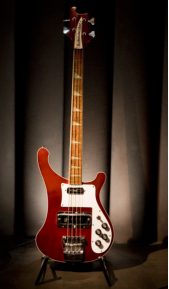
Pickups: one humbucker (bridge) and retrofitted with a Toaster (neck).
Strings: Elixir .040-.095 Super Light round wound with Nanoweb coating.
Character: Rickenbacker basses have a very distinctive tone with a rich frequency content - almost piano-like. The 4001 bass has a neck-through construction for really solid sustain.
Famous users: Chris Squire (Yes), Geddy Lee (Rush), Lemmy (Motörhead), Roger Glover (Deep Purple), Paul McCartney, Roger Waters (Pink Floyd).
|
| Source
|
|
|
| Source
|
|
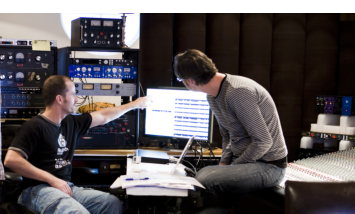
Producer and project manager: Kristoffer Wallman
Recording engineer: Niklas Flyckt
Bass player and connoisseur: Sven Lindvall
Rickenbacker bass player: Stefan Fandén
Sampling consultant: Per Larsson, SampleTekk
Editing and programming: Peter Jubel, Loui Westin, Kristoffer Wallman and Attila Cederbygd.
Graphics: Andreas Karperyd
Thanks to: Bosse Person, Anders Bagge, Pontus Winnberg, Christian Karlsson, Hans Backenrot and all the beta testers.